
10 Fun Ways to Get Your Child to Speak Chinese (Without Forcing Them!)

“Why won’t my child speak Chinese?” You’re not alone if you’ve asked this question. Whether you’re a fluent native speaker or a parent with limited Chinese, getting kids to speak a minority language—without pressure—can feel overwhelming.
But here’s the good news: you don’t need to force it.
With the right approach, children will want to speak Chinese—because it’s fun, connected to their interests, and part of your relationship. This post will show you 10 engaging, low-pressure ways to invite more Chinese into your daily life.
Let’s dive in!
10 Fun Ways to Get Your Child to Speak Chinese (Without Forcing Them!)
1. Use Their Favourite Toys for Role Play in Chinese
Engage your child in imaginative play to encourage Chinese speaking. Play with dolls, stuffed animals, or figurines (especially your child’s favourite ones) and make them “talk” in Chinese. Children are more willing to speak when it’s through play.
Example Phrases: “小熊说他饿了!” (Xiǎo xióng shuō tā è le!) – “Teddy says he’s hungry!”
2. Sing Chinese Songs with Familiar Tunes
Utilise known melodies to make learning Chinese enjoyable. Start by finding the Chinese versions of English nursery rhymes your child already knows—like “Twinkle Twinkle Little Star” or “The Wheels on the Bus”. Since the melody is the same, your child will feel more confident joining in, even if they’re unsure of the words at first.

The goal isn’t perfection—it’s participation and joy. When music feels familiar, your child is more likely to sing, speak, and have fun learning Chinese naturally!
3. Cook Together: Kitchen Missions in Chinese
Turn meal prep into a fun Chinese language activity. Transform your little ‘Attention Seeker” into a little Sous Chef.

Just two rules:
- Simple tasks, and lots of praise.
- Safety first, mistakes are ok!
Sometimes, it is not the result of language learning surprises you, but the joy of parent-child interaction.
Example Phrases:
“把鸡蛋放进碗里。” (bǎ jī dàn fàng jìn wǎn lǐ) – Put the egg in the bowl.
“帮我剥蒜吧!” (bāng wǒ bāo suàn ba)- Please help me peel the garlic.
4. Go on a Chinese Scavenger Hunt
Combine adventure with language learning. Turn an ordinary walk or home playtime into a bilingual treasure hunt!
Create a simple list of things to find (with checkboxes or pictures for younger kids).
Example Phrases:
- “找找红色的东西。” (Zhǎo zhǎo hóng sè de dōng xi) – “Find something red.”
- “你看到小鸟了吗?” (Nǐ kàn dào xiǎo niǎo le ma?) – “Did you see a bird?”
Bonus tip: Create a printable version or use photos of real objects. Check Our Popular Chinese Scavenger Hunt Collection.
5. Dance Silly Dances in Chinese
Incorporate movement to reinforce vocabulary. Make movement and music the spotlight! Play “Freeze Dance” or “Head, Shoulders, Knees, and Toes” in Chinese.

Example Phrases:
- “跳起来!” (Tiào qǐ lái!) – “Jump!”
- “停!” (Tíng!) – “Stop!”
- “头、肩膀、膝盖、脚趾~” (Tóu, jiān bǎng, xī gài, jiǎo zhǐ) – “Head, shoulders, knees, and toes!”
Kids love repetition + rhythm—it builds muscle memory and language skills.
6. Play Classic Games in Chinese
Adapt familiar games to practice Chinese naturally. Think hide-and-seek, charades, or guessing games—just with simple Chinese phrases.
Example Phrases:
- “我看到你啦!” (Wǒ kàn dào nǐ la!) – “I see you!”
- “猜猜我是谁?” (Cāi cāi wǒ shì shuí?) – “Guess who I am?”
- “你是小兔子吗?” (Nǐ shì xiǎo tù zi ma?) – “Are you a bunny?”
Games remove pressure and make language feel like play (because it is!).
7. Use Mealtime Talk Cards
Facilitate conversations in Chinese during meals. Create little “question cards” with visuals. During meals, pick one and talk in Chinese. Keep it super short and simple.
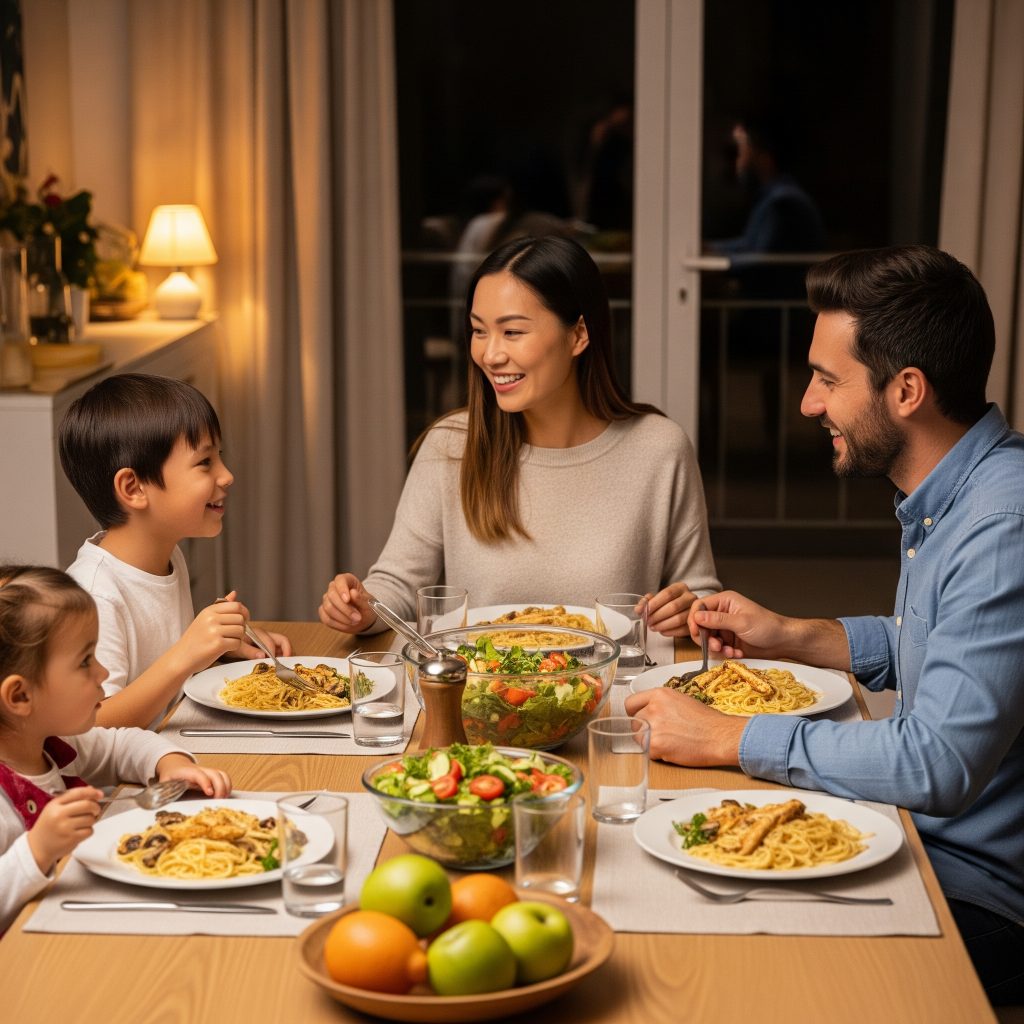
Example Questions:
- “今天你想吃什么甜品?” (jīn tiān nǐ xiǎng chī shén me tián pǐn?) – “What do you like for dessert today?”
- “你今天开心吗?” (Nǐ jīn tiān kāi xīn ma?) – “Were you happy today?”
For shy speakers, they can point or answer with one word at first.
8. Make a Chinese Weather Report
Discuss daily weather to build vocabulary. Turn looking out the window into a Chinese speaking opportunity.
Example Phrases:
- “今天是晴天还是下雨天?” (Jīn tiān shì qíng tiān hái shì xià yǔ tiān?) – “Is it sunny or rainy today?”
- “你想不想出去玩?” (Nǐ xiǎng bù xiǎng chū qù wán?) – “Do you want to go outside and play?”
You can even record your child’s ‘weather report’ as a fun keepsake.
9. Do a “Mini Market” Role Play in Chinese
Simulate shopping scenarios to practice vocabulary. Set up a pretend shop using real or toy fruits, snacks, or household items. One person is the shopkeeper, the other is the customer.

Example Phrases:
- “我要一个苹果。” (Wǒ yào yí gè píng guǒ.) – “I want an apple.”
- “请问多少钱?” (Qǐng wèn duō shǎo qián?) – “How much is it?”
This game gives your child real-life phrases to practice speaking Chinese in context.
10. Use a “Bedtime Puppet Chat” in Chinese
End the day with a comforting language activity. If your child is tired at night, try a calm and silly trick: let their favourite puppet do the talking.

Grab a cuddly toy and give it a Chinese name (like 小乐 Xiǎo Lè). Then, let the puppet gently “ask” your child questions like:
- “Did you have fun at school today?”
- “What did you eat for dinner?”
- “Can we read a book together?”
Since it’s not a parent asking, the pressure is off—kids often respond to puppets when they hesitate to speak to grownups.
Even simply say “晚安(wǎn ān) Good Night !” “好梦(hǎo mèng) Sweet Dream” ” 我爱你(wǒ ài nǐ) I Love You!”.
A sweet way to end the day with Chinese input in a warm, emotionally safe setting.
Bonus Tip: Keep the Pressure Low and the Fun High
The secret to helping your child speak Chinese isn’t drilling vocab—it’s creating emotional, playful, and consistent opportunities to use it.Speak with love. Laugh often. And celebrate every single word.
More Tips On Bilingual Parenting






Leave a Reply