How Positive Affirmations Can Help Your Child Learn Chinese (Even If You’re Not Fluent)
Why Positive Affirmations Matter in Bilingual Chinese Learning
Positive Affirmations for Kids in Chinese – Build Confidence & Connection!
If you’ve ever worried, “Am I qualified to teach my child Chinese?”, you’re not alone. Many bilingual parents feel insecure—especially if they aren’t fluent themselves.
But what if the key to raising a bilingual child isn’t perfect grammar or advanced vocabulary?
What if it starts with something more powerful: connection and love?
As a mom raising my daughter to speak Chinese in an English-dominant environment, I’ve seen firsthand how positive affirmations—words of warmth, support, and connection—can help language learning happen naturally.
From Silence to Connection: Why Positive Affirmations in Chinese Matter
Growing up in China, I rarely heard the words “I love you” from my parents. Love was shown through actions — home-cooked meals, warm clothes, long hours of sacrifice. But verbal affirmations? They felt awkward, even unnecessary.
When I moved to the UK at 25, everything changed. I witnessed how Western families expressed love openly — through hugs, gentle words, and simple phrases like “I’m proud of you.” It was a culture shock. I remember the first time I hugged my mum at the airport and told her, “I love you.” We both laughed nervously — but deep down, I felt a connection I had never experienced before.
Sadly, I never had the chance to say those words to my father. He passed away before I moved abroad. That regret stays with me, and it drives me to speak love out loud to my own child — every single day, in Mandarin and English.

More Than ‘Good kid’ — : Positive Affirmations vs. Traditional Praises in Chinese
In traditional Chinese culture, praise often comes in the form of labels:
“你真乖” (You’re such a good girl/boy),
“你很勤奋” (You’re hardworking),
“你真聪明” (You’re smart).
These phrases are familiar — but are they truly affirming?
Words like “乖” (guāi, obedient) may sound positive, but they often reinforce compliance rather than confidence. They can unintentionally shape children into “people-pleasers,” more focused on being accepted than being seen.
Modern parenting calls for something more — Positive Affirmations for Kids in Chinese, language that recognises effort, emotion, and individuality.
For example, instead of “你真乖,” what if we said:
“You really tried hard today.”
“I saw how kind you were to your friend.”
“I love how you solved that problem.”
These affirmations, in Chinese or English, help children feel valued for who they are, not just how they behave.
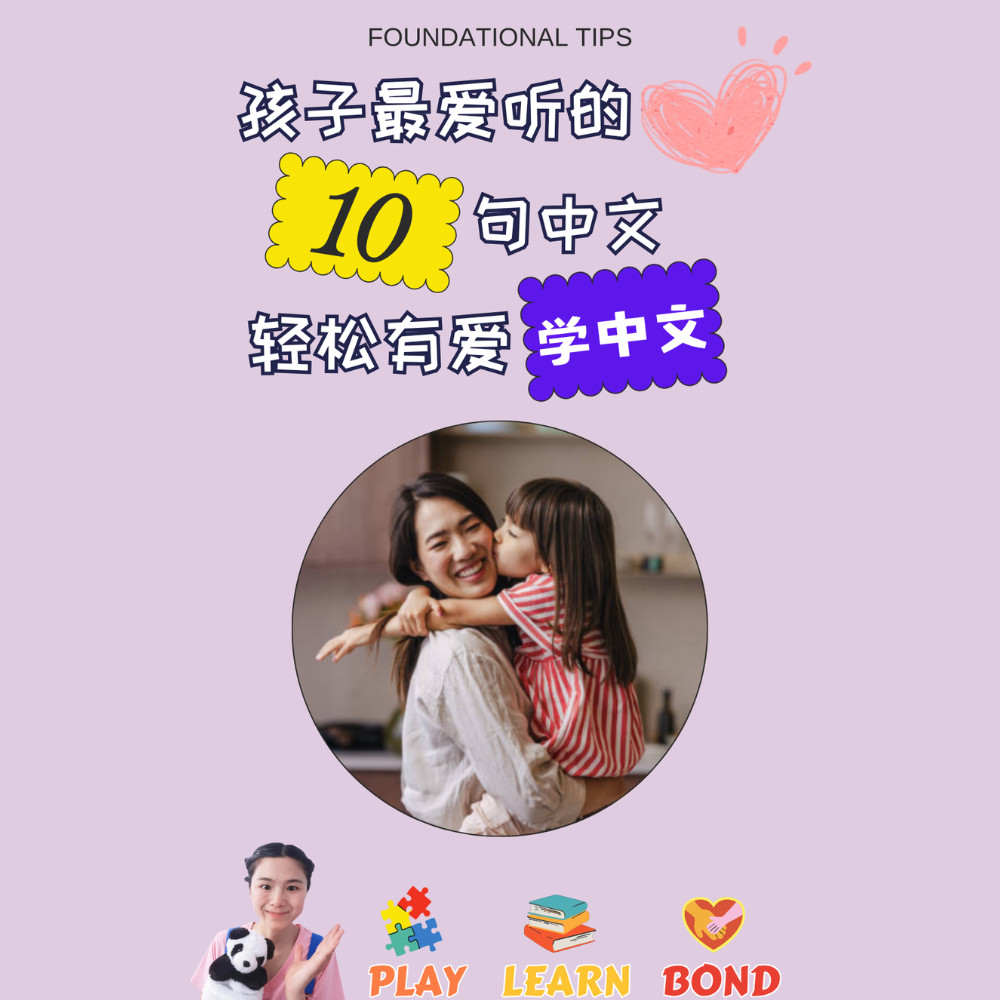
Bonus: Watch My Short Video of “10 Simple Chinese Positive AffirmationsThat Kids Love to Hear”→
Why Positive Affirmations Help Kids Learn Chinese with Confidence?
Positive affirmations are short, encouraging phrases that affirm a child’s worth, feelings, and efforts. In a bilingual context, positive affirmations for kids in Chinese can serve two purposes at once:
- Strengthen emotional connection
- Provide natural, meaningful Chinese language input
For Example:
When I say to my daughter:
“你很特别。” (nǐ hěn tè bié – You are special)
I’m not just teaching vocabulary.
I’m helping her associate Chinese with love, comfort, and confidence.
Explore our Step-by-step Guide to Raising a Bilingual Child→
What the Research Says

According to a 2018 Harvard study, speaking a child’s heritage language activates emotional centers in the brain—particularly the amygdala. This creates deeper emotional bonds and reinforces a sense of safety and belonging.
Therapist Sam Louie writes,
“Many Asian children report thinking their parents loved them—but they couldn’t feel the love.”
Let’s help our children feel it—in Chinese.
Bridging Parenting Cultures Through Positive Affirmations
In many Western homes, phrases like “I’m proud of you” or “You did great” flow easily. In traditional Chinese families, love is often shown through food, protection, and hard work—not words.
But bilingual parenting gives us a chance to blend the best of both worlds.
Let’s raise children who feel emotionally seen and stay connected to their heritage language. Speaking Chinese affirmations at home helps children feel connected. Moreover, affirmations build emotional safety.
Millennials and Gen Z parents have already started to say “我爱你I Love You” to kids more often. In fact, we can also say things like:
- “我真为你骄傲。” (I’m so proud of you.)
- “做错了也没关系。” (It’s okay to make mistakes.)
- “我在听。” (I’m listening.)
10 Affirmations in Chinese You Can Start Saying Today
Here are 10 positive affirmations in Chinese I use with my daughter, every single day.
They’re short, loving, and perfect for families at any Chinese fluency level.
- 我爱你。| wǒ ài nǐ | I love you.
- 我真为你骄傲。| wǒ zhēn wéi nǐ jiāo’ào | I’m proud of you.
- 做错了也没关系。| zuò cuò le yě méi guānxi | It’s ok to make mistakes.
- 谢谢你愿意尝试。| xiè xiè nǐ yuàn yì cháng shì | Thank you for trying.
- 我在听。| wǒ zài tīng | I’m listening.
- 你的主意很棒。| nǐ de zhǔ yì hěn bàng | Your idea is great!
- 我也有很多需要学习的。| wǒ yě yǒu hěn duō xū yào xué xí de | I have a lot to learn too.
- 你很特别。| nǐ hěn tèbié | You are special.
- 加油!| jiā yóu | Keep going! / You’ve got this!
- 你很勇敢!| nǐ hěn yǒng gǎn | You are brave!

How to Start Using Positive Affirmations in Chinese—Even If You’re Not Fluent
- Pick 1 or 2 phrases that feel natural
- Use them at bedtime, after school, or during quiet play
- Add facial expressions, gestures, and a loving tone
- Print and tape them on the fridge, mirror, or toy shelf
- Repeat regularly (repetition = retention)
Remember, fluency is not required—connection is.
Final Thoughts: Where Positive Language Meets Bilingual Love
Positive affirmations in Chinese are more than just nice words — they’re bridges.
They connect generations, soften cultural gaps, and turn a heritage language into a language of love.
Whether you’re whispering “我爱你” at bedtime, or saying “谢谢你愿意尝试” after a messy dinner, every phrase becomes a seed. More importantly, a seed of emotional connection, a seed of language confidence.
You’re not just helping your child speak Chinese —you’re helping them feel loved in Chinese.
Let’s raise bilingual children who don’t just understand the language —they feel it.
More Tips On Bilingual Parenting




Leave a Reply