
5 Gentle Reading Strategies to Support Mandarin at Home
Have you ever wished you could turn storytime into Mandarin reading time—even if your child doesn’t always sit still or you don’t own many Chinese picture books? The good news: you don’t need to pressure your child or stock a huge Chinese library.
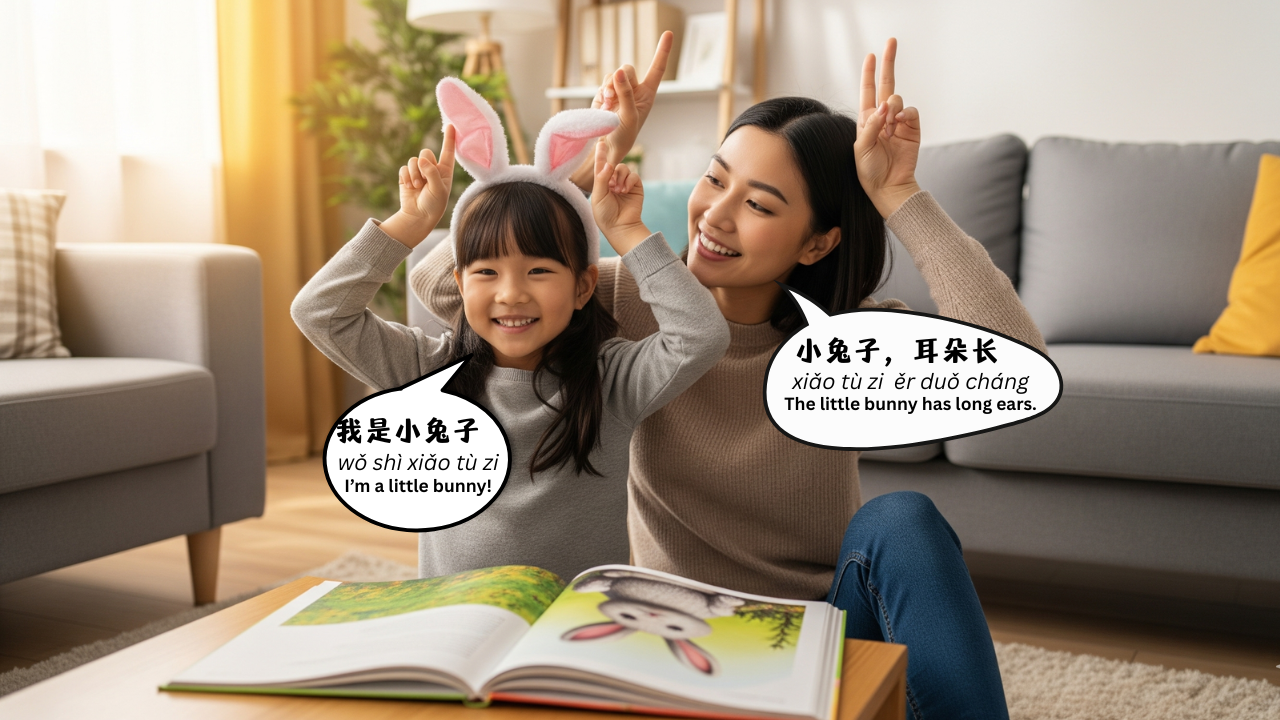
With gentle reading strategies, you can weave Mandarin naturally into everyday storytime, no matter your own language level. These tips focus on connection, play, and realistic steps that fit family life—so Mandarin becomes part of your child’s warm reading memories.
1. Start with Pictures, Not Pages
Many experts recommend reading every sentence in a picture book to expose children to rich language structures. This is absolutely valuable—but sometimes, especially with toddlers or preschoolers, reading every word simply isn’t realistic.
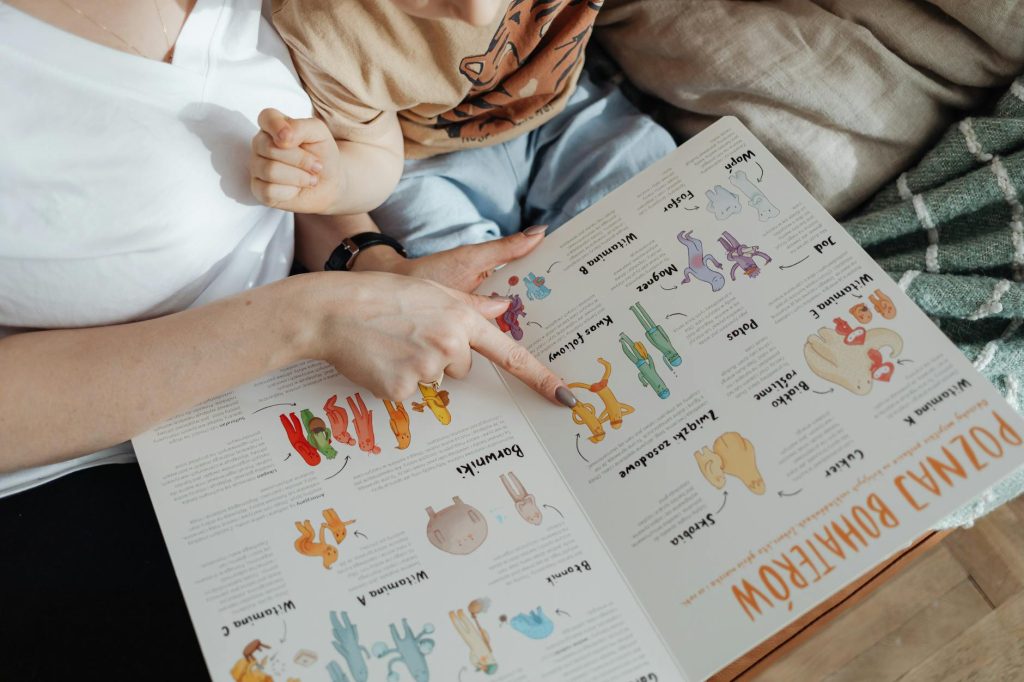
If your child doesn’t have the patience yet, start with the pictures. Ask simple questions in Mandarin:
- “你看见了什么?(nǐ kàn jiàn le shén me?) What do you see?”
- “小狗在哪里呢?(xiǎo gǒu zài nǎ lǐ ne?) Where is the puppy?”
This way, your child can interact without feeling overwhelmed.
How to transition later:
- In early years, it’s fine to retell in your own words.
- As your child grows, mix short comments with actual sentences from the book.
- Over time, your child will be more willing to listen to full Mandarin sentences, and eventually, whole stories.
Gentle reading doesn’t mean skipping the book—it means meeting your child where they are and building up step by step.
2. Pick Short, Repetitive Books
Children thrive on repetition. Short, predictable books make Mandarin feel fun instead of intimidating.
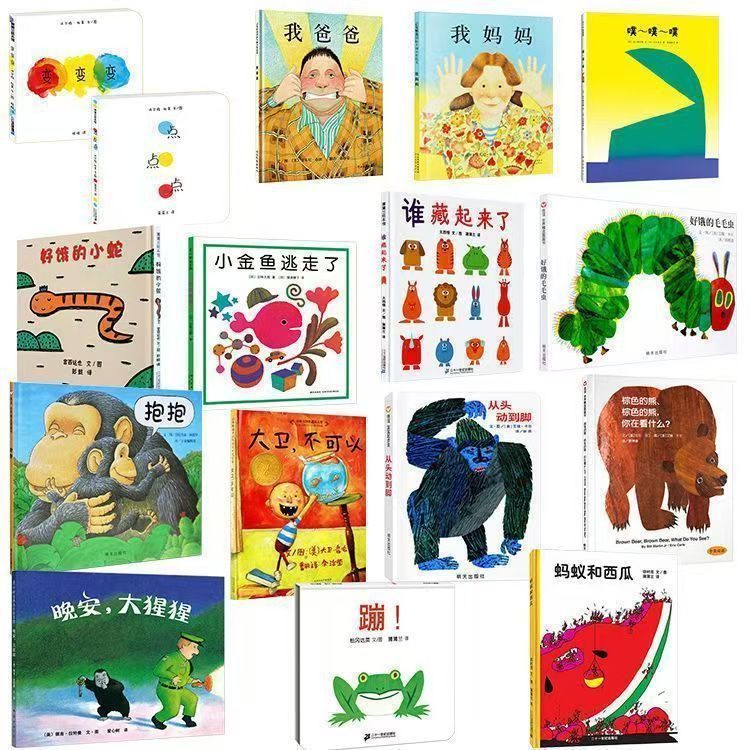
Here are some English classics with well-known Chinese editions you can use:
The Very Hungry Caterpillar by Eric Carle→ 《好饿的毛毛虫》| Dear Zoo by Rod Campbell→ 《亲爱的动物园》| Brown Bear, Brown Bear, What Do You See? by Bill Martin Jr. → 《棕熊,棕熊,你看到了什么?》| Guess How Much I Love You by Sam McBratney→ 《猜猜我有多爱你》| Goodnight, Gorilla by Peggy Rathmann→ 《晚安,大猩猩》| Press Here by Hervè Tullet→ 《点点点》…etc.
How to use them:
- Read a repeated line in Mandarin each time it appears.
- Emphasize keywords like animals, colors, or actions.
- Invite your child to “finish the sentence” in Mandarin.
Because of the rhythm and repetition, kids quickly catch on and feel confident joining in.
3. Sprinkle Mandarin into English Books
Don’t have many Chinese books? No problem. Pick 2–3 Mandarin words per story to repeat naturally. For example:
- In The Very Hungry Caterpillar, say “苹果 píng guǒ” when the caterpillar eats apples.
- In Brown Bear, emphasize the color word in Mandarin: “红色 hóng sè.”
You’re not translating the whole book—you’re gently adding Mandarin anchors that stick in your child’s memory.
4. Make Reading Interactive
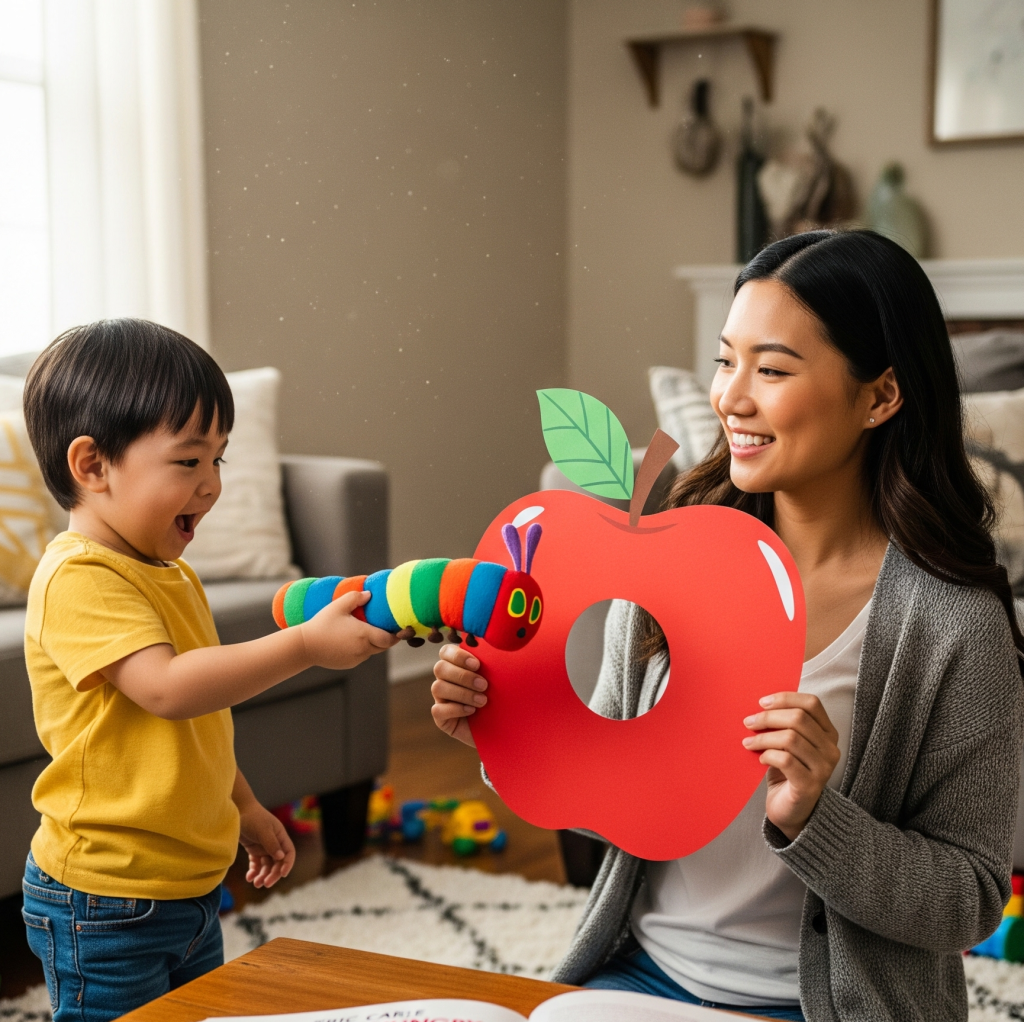
Reading doesn’t mean sitting still. For any parent with a restless child, you know story time can be a real struggle. And it’s even harder when you’re trying to read in Mandarin!
That’s when it’s time to become a magician, a clown, or a master puppeteer. Let’s face it, we parents are truly multi-talented!
It’s not easy, but using actions, toys, and pointing games is a guaranteed way to bring the book to life. This interactive approach keeps little ones engaged and helps those Mandarin words stick, one laugh at a time.
5. Celebrate the Effort, Not the Perfection
When your child tries a Mandarin word—even if tones or grammar aren’t perfect—praise warmly:
- “哇,你今天尝试说中文了,真棒!(wā, nǐ jīn tiān cháng shì shuō zhōng wén le, zhēn bàng!) – Wow, you tried speaking Mandarin today—amazing!”
- “你愿意说中文,真勇敢!(nǐ yuàn yì shuō zhōng wén, zhēn yǒng gǎn!) – You were brave to use Mandarin!”
This way, your child feels proud of the attempt itself, and also connects the positive encouragement with Mandarin, which motivates them to keep speaking more.

Why not try our Daily Mandarin Boost – Printable Encouragement Stickers & Toolkit for Kids ,designed to help kids connect Mandarin with love, support, and encouragement.
Key Takeaways for Gentle Mandarin Reading
- Gentle strategies like picture-based talk and repetition make Mandarin reading time stress-free.
- Repetitive books and interactive play help kids remember Mandarin naturally.
- Parents with strong or limited Mandarin skills can adapt—either by retelling in their own words or sprinkling in key Mandarin terms.
- Encouragement matters more than perfection: positive emotions build confidence.
Try This Next
Want to make Mandarin reading even more fun? Download our Daily Mandarin Boost – Printable Encouragement Stickers & Toolkit for Kids. Use the stickers after storytime to cheer on your child’s effort and keep Mandarin connected to joy.
Or explore more from our Bilingual Tips category for practical, real-life ways to raise a confident Mandarin speaker.
