
Simple Mandarin Reading Tips That Finally Worked for Us
Have you ever sat down for Mandarin reading time with your child, only to feel frustrated when they wriggle away or lose interest after two pages? I’ve been there. For a long time, storytime felt more like a struggle than a joy.

But over time, I discovered a few simple Mandarin reading tips that finally worked for us. These small changes transformed reading from a daily battle into one of the sweetest moments of our routine. Not only did my child start enjoying books more, but she also began using new Mandarin words naturally in everyday life.
In this post, I’ll share the exact approaches that worked in our home—so you can feel confident that Mandarin reading time doesn’t have to be perfect to be powerful.
The Simple Mandarin Reading Tips That Finally Worked for Us

After many trial-and-error storytimes, I realized I didn’t need a perfect script or a shelf full of Chinese books. What worked was keeping things simple—short phrases, playful repetition, and connecting the stories to our real life. These small changes turned reading into a moment my child actually looked forward to, and slowly, she began using new Mandarin words on her own.
In the next examples, I’ll share the exact strategies we used—so you can see how Mandarin reading time can be both practical and fun, even if your child’s attention span feels short or your resources are limited.
Example1: How Short, Repetitive Books Supported Mandarin Reading Time
I once bought the Yimu Baohe (一亩宝盒) beginner-level set, originally designed for 2–4-year-olds in China. Surprisingly, these worked beautifully for my overseas child, who was just starting Mandarin.
At first, I didn’t read word for word. Instead, I looked at the pictures with my child, describing what we saw in simple Mandarin:
“看,有一只鞋子! kàn, yǒu yī zhī xié zi ! — look, there is a shoe here!”
“这是云朵宝宝,嗨,云朵宝宝!zhè shì yún duǒ bǎo bǎo, hāi, yún duǒ bǎo bǎo!— This is Baby Cloud, let’s say hi to the Baby Cloud!”
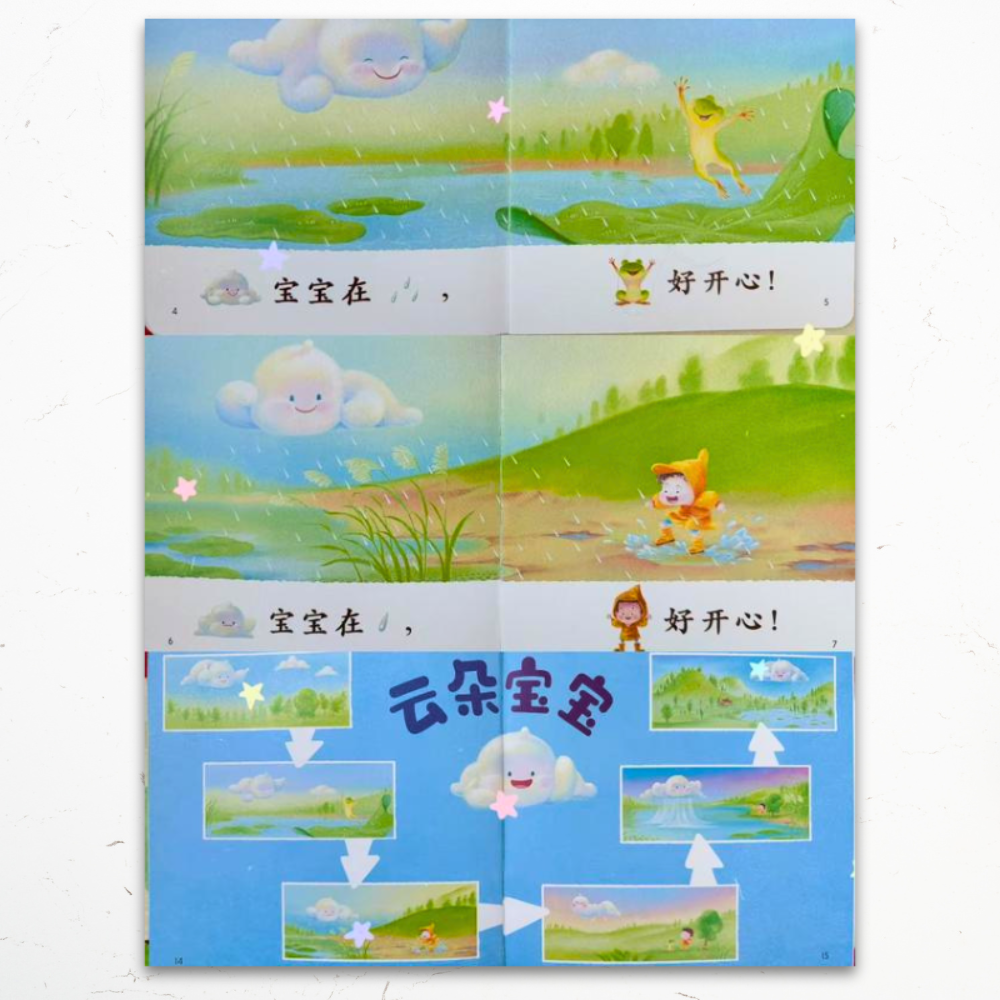
Gradually, I began pointing at the actual text, reading with exaggerated expression and rhythm. The design of these books—with repetition and picture-word substitution (like a cloud icon for the word “云朵” yún duǒ-cloud)—made it natural for my child to follow along.
Over time, she began to recognize characters and even attempted to say them aloud. The repetition gave her confidence: “I can understand some Chinese. I can say it too!”
Takeaway for parents:
If your child (or you as a parent) has limited Mandarin, try this method:
- Start with picture + simple keywords, repeated often.
- Slowly shift to full-sentence reading with emotion.
- Use books with repetition so your child hears and sees the same Mandarin words many times.
Example2: Extending Mandarin Reading Time Beyond the Page
Another unforgettable experience was when my child became obsessed with “Mama Buys Green Beans (妈妈买绿豆)”, a classic picture book.

This book resonated with me personally because it reminded me of my own childhood summers drinking mung bean soup and eating mung bean popsicles. As I read aloud, I often added short personal stories:
“妈妈小的时候,外婆也经常煮绿豆汤给妈妈喝,特别是夏天的时候。。。When I was little, Grandma also made sweet green bean soup for me too, especially in the summer time…”
My child loved these side stories. The next day, she asked to cook mung bean soup together. She had never eaten mung beans before, but this time she bravely tasted it.
Later, inspired by the book’s sprouting scene, we did a one-week green bean sprout experiment at home.

Each day, we observed and recorded the changes—sometimes drawing, sometimes writing words. She learned to write the character “豆” because it became meaningful in her world.
Takeaway for parents:
- Use books as springboards for real-life experiences.
- Connect the story with family traditions or childhood memories.
- Extend the book with a mini experiment, cooking, or art project, and tie it back to Mandarin vocabulary.
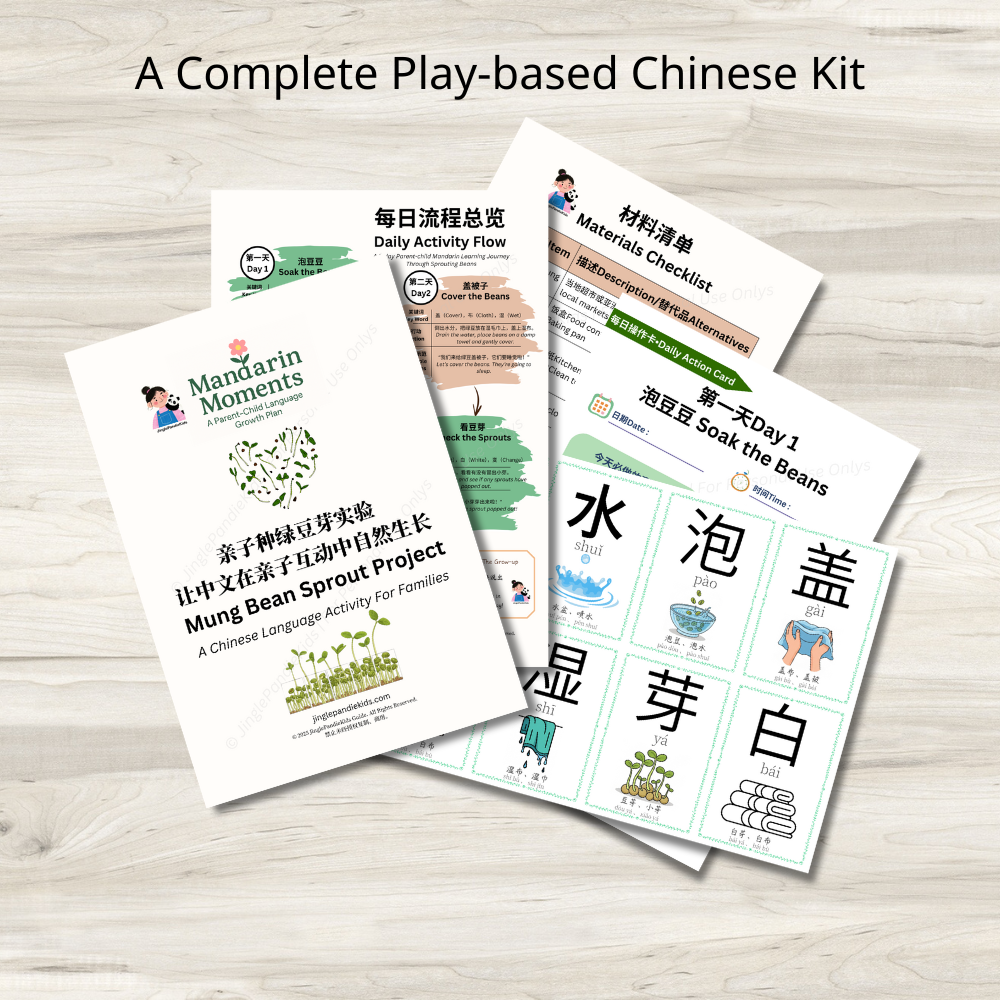
I even created a 15-page printable toolkit from this activity, including:
- Parent-child dialogue prompts
- Daily Activity Flow
- Daily Action card
- Sprout Journal
- Optional Activities
- Key Vocabulary Flashcards
How You Can Try These Mandarin Reading Tips at Home
You don’t need to copy these exact books. The key is the strategy:
- Choose short, repetitive texts for beginners.
- Read with expression, even if your child can’t sit still for long.
- Add your own stories to build emotional connection.
- Turn stories into real experiences (cooking, planting, drawing).
- Repeat key words and phrases so your child hears them again and again in natural contexts.
Key Takeaways for Mandarin Reading Time
- Kids don’t need dozens of Chinese picture books. With the right approach, even a few texts can create meaningful Mandarin reading time.
- Repetition, personal storytelling, and real-life activities make Mandarin memorable.
- The goal of Mandarin reading time is not just to finish a book, but to build confidence and daily connection with the language.
Try This Next
- Explore other strategies in our Reading Tips collection
- Check out our Bilingual Parenting Q&A page for common parent questions
- Download Mandarin Story Extension Printables
