
How to Introduce Chinese Characters Without Pressure
Many parents worry: “When should my child start learning Chinese characters? At age 3? 4? 5?” You may have heard stories like “That child could already write 200 characters before kindergarten!” These comparisons easily create pressure—especially for overseas families who don’t live in a Chinese-rich environment.
The truth? Chinese literacy doesn’t have to begin with drills, flashcards, or strict age milestones. At home, I’ve found playful, gentle methods that helped my child see characters not as a burden, but as something fun and meaningful.
In this post, I’ll share both expert-backed insights and personal experiences to show you how to introduce Chinese characters without pressure.
Why Age Shouldn’t Be the Benchmark for Learning Chinese Characters
If you’ve ever asked, “At what age should my child start reading and writing characters?”—you’re not alone. Many parents compare milestones: “My friend’s child could read 300 words by age 5!”
Here’s why that mindset is unhelpful:
- Every child develops differently. Fine motor skills, attention span, and interest all mature at different ages.
- Motivation matters more than age. Forcing early literacy often creates resistance. Waiting until a child shows interest can actually make learning faster.
- Overseas kids have a different environment. They don’t see Chinese characters on every street sign or cereal box like kids in China. Expecting the same pace is unfair.
- Starting later doesn’t mean falling behind. With the right input, children can catch up quickly—even if they begin at 6 or 7.
Instead of asking “What’s the right age?”, ask:
- Is my child curious about Chinese characters?
- Do they encounter characters in books, games, or daily life?
- Do they try to imitate or play with writing spontaneously?
The key is not early, but joyful, consistent, and natural.
How We Introduced Characters Without Pressure at Home
In our home, introducing Chinese characters started not with worksheets, but with play and stories. Here are a few things that actually worked:
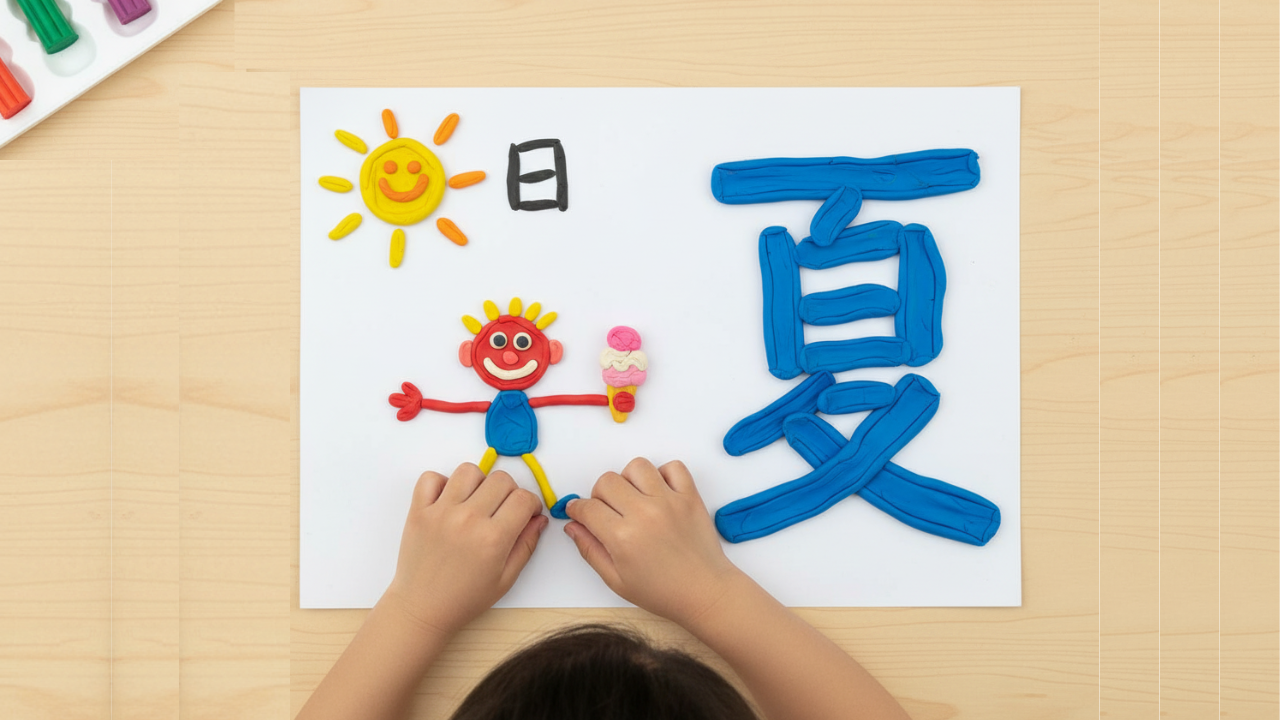
1. Introduce Chinese Characters Through Playdough
Instead of a pencil, we used playdough. My child rolled strokes and pieced them together into simple characters like 大, 人, and 山. It felt like art, not homework—and built muscle memory for stroke order naturally.
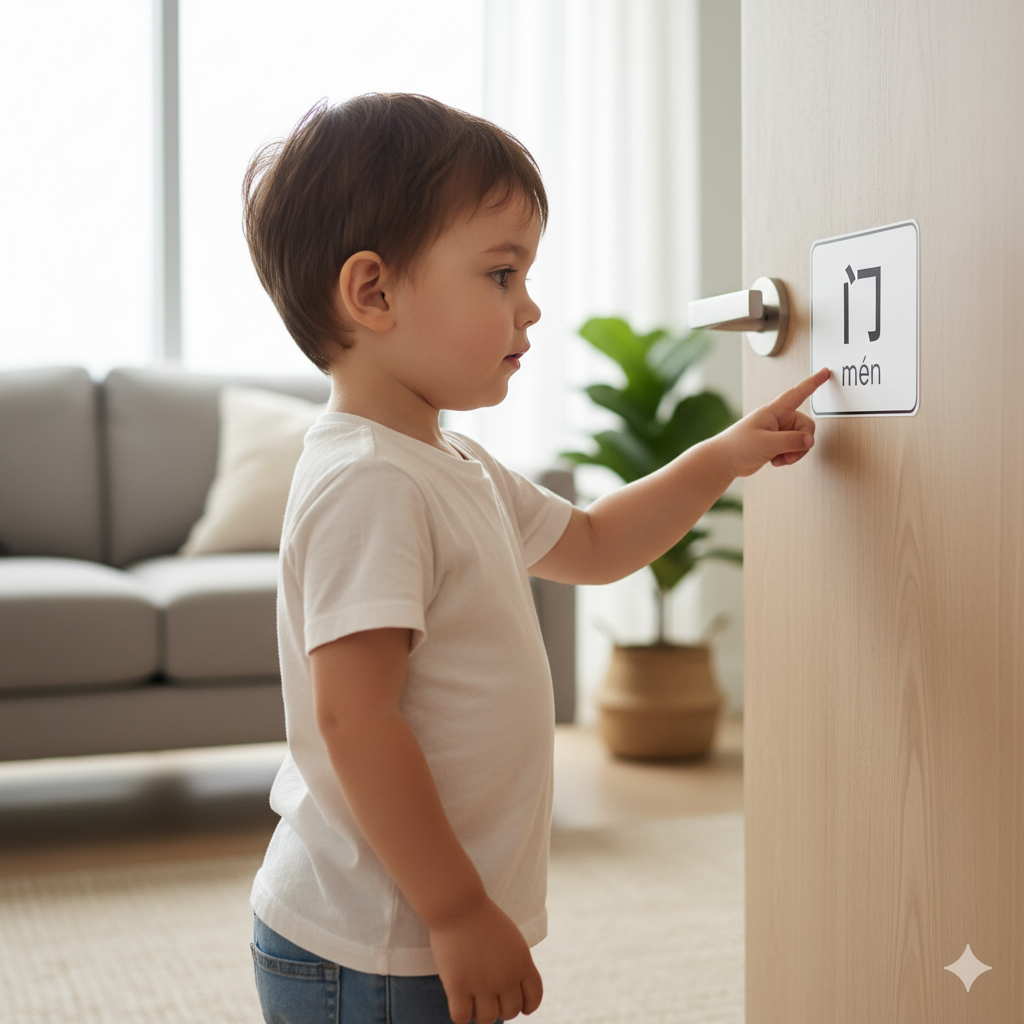
2. Chinese Characters Labels Around the House
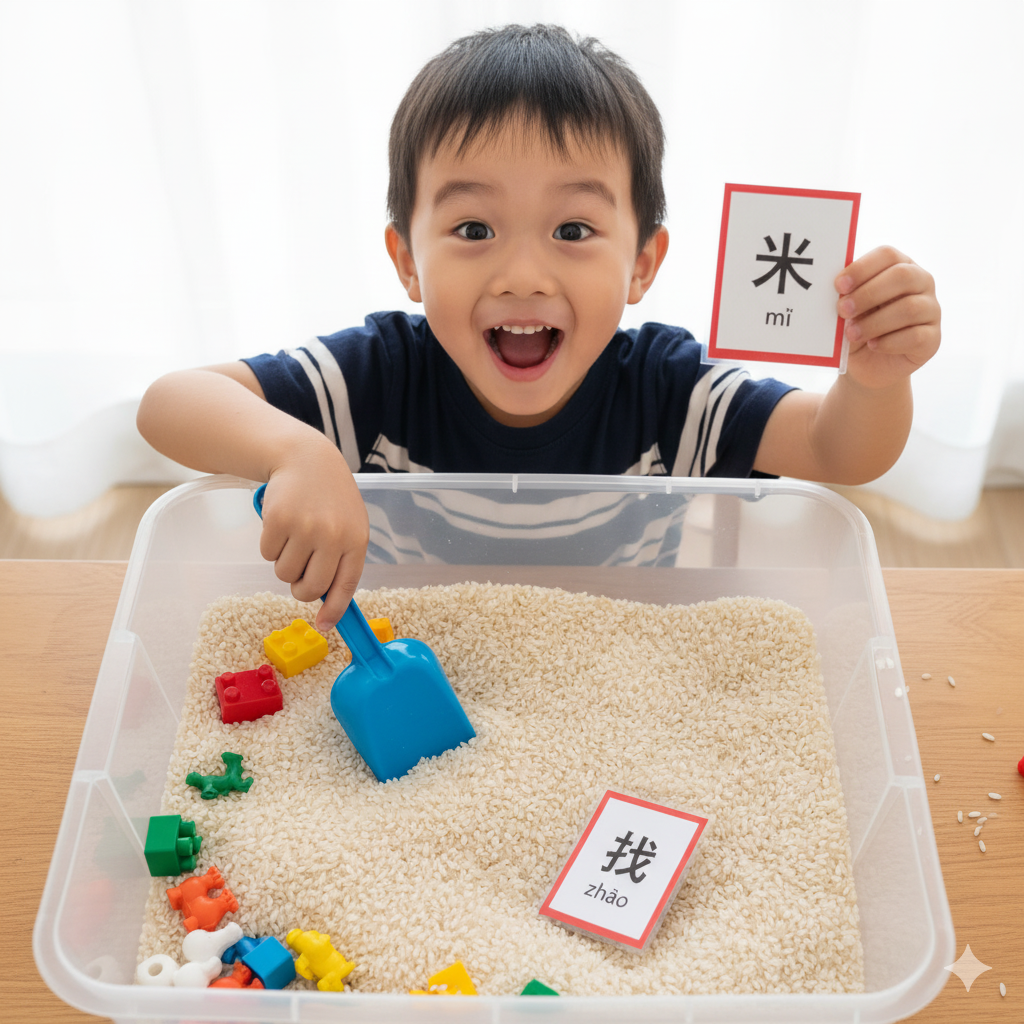
We placed sticky notes on common objects: 门 (door), 桌子 (table), 水 (cup). Then we’d “go find the words” in a scavenger hunt. This connected Chinese characters directly to daily life.
3. Turning Books Into Chinese Character Invitations
One of my child’s favorite books is 我的第一本汉字书 (My First Chinese Character Book). It shows pictures, oracle bone script, and modern characters side by side. My child loved copying the ancient forms first—because they looked like little drawings—before imitating the modern character. Characters became symbols to play with, not rules to memorize.
4. Making Daily Drawing/Scrapbook With Chinese Characters
Sometimes when my child drew pictures or made scrapbook, I’d write a simple character (like 豆 during our mung bean sprout experiment) next to the drawing. At the beginning, she copied my handwriting. Over time, she began adding characters on her own. Writing naturally slipped into creative play.
5. Playing Small, Themed Activities with Chinese Characters included
Another stress-free way I’ve introduced characters is by creating small themed activities. These don’t have to be elaborate—they’re just playful moments where characters naturally show up.
For example:
- In summer, we used my Summer-Themed Toolkit: writing characters like 冰 (ice), 西瓜 (watermelon), and 热 (hot) while doing crafts or tasting watermelon.
- On rainy days, the Weather-Themed Toolkit came in handy: we talked about 雨 (rain), 云 (cloud), and 风 (wind) while making craft about weather scenes or watching raindrops at the window.
Because these activities are short, fun, and tied to real experiences, my child didn’t even notice she was “learning.” She just enjoyed the play—yet characters started to feel familiar and meaningful.
What Parents Can Try To Introduce Chinese Characters
If you want to introduce Chinese characters without pressure, here are some easy, low-prep strategies:
- Start with play materials (playdough, stickers, scavenger hunts).
- Use storybooks that link visuals with characters.
- Add characters to daily life—labels, drawings, or cooking activities.
- Follow your child’s interest. If they copy a character or ask “What does this say?”, that’s the perfect moment.
- Celebrate attempts, not perfection. Even scribbles or partial strokes mean they’re experimenting.
Key Takeaways For Introducing Chinese Characters Naturally
- You don’t need to chase an “early start.” Curiosity and consistency matter more than age.
- Play-based Chinese character activities help kids stay motivated.
- Books like My First Chinese Character Book can spark imagination by connecting pictures and ancient forms to modern writing.
- The goal is for kids to see Chinese characters as approachable, joyful, and part of everyday life.
Try This Next
Explore my Chinese Literacy Activities collection for playful ideas.
Read my blog on 10 Fun Chinese Literacy Activities Kids Actually Enjoy.
Download my free Chinese Character Play Checklist —with simple, no-prep games you can start today.
